Monday, March 19, 2012

Rosie Of Washington Square Park's Scabby Eyelids

 A photo by Francois Portmann, http://www.fotoportmann.com/birds/ of Rosie of Washington Square Park.  I took the liberty of cropping it  so you could see what wildlife rehabilitator Bobby Horvath is addressing in his email printed below.  
                       (My apologies to Francois.)


Hi Donna,

I blew the pictures up . There appears to be crusty growths on the eyelid. Possibly pox virus but cannot say for sure. I know its been going on for months so its a slow progressing condition whatever it is.

Its only affecting the one side right now I see . It doesn't look like it has any affect on the vision in that eye yet. Only time will tell if it eventually ceases or continues to grow and become an issue on that side.   

Do watchers observe her scratching it at all like it bothers her ?

There's really nothing that can be done without having her in hand to get a scraping for testing and diagnosis. Even then she would need to be contained for a period for probable antibiotic/medication treatment once it is determined what it is.

Now is obviously not a good time for this to be considered and hopefully if it gets worse it  will hold off long enough till her to fulfill her necessary duties during this breeding season .

Thank you Bobby  for taking a look.  I don’t think you’ll get any argument from anyone on that recommendation.

As whatever the malady may be, as you say it has been going on for awhile without appearing to  affect Rosie’s vision or handicap her in any way, that her duties as a Mom during breeding season,  trumps scabby eyelids on an eye that works just fine every time.

And do write in the comments section as per Bobby Horvath's request or click on the "contact me" button to report any scratching or other behavior that might suggest that Rosie is dealing with any symptoms caused by  the "scabby eyelids" of her right eye.

Now,  run do not walk to Francois' site to see his spectacular photos of the spectacular Rosie protecting her dinner from a brown-tail in Tompkins Square Park.  She is one hot hawk! http://www.fotoportmann.com/birds/

Also James O'Brien over at The Origin of the Species Blog has some gorgeous pictures of the Divine Isolde of  The Cathedral Church of St. John the Divine.  

Some good hawk news for a change.  

Isolde and Norman appear to be doing just dandy so far this season.   http://yojimbot.blogspot.com/

Happy Hawking!
Donegal Browne 

Saturday, March 17, 2012

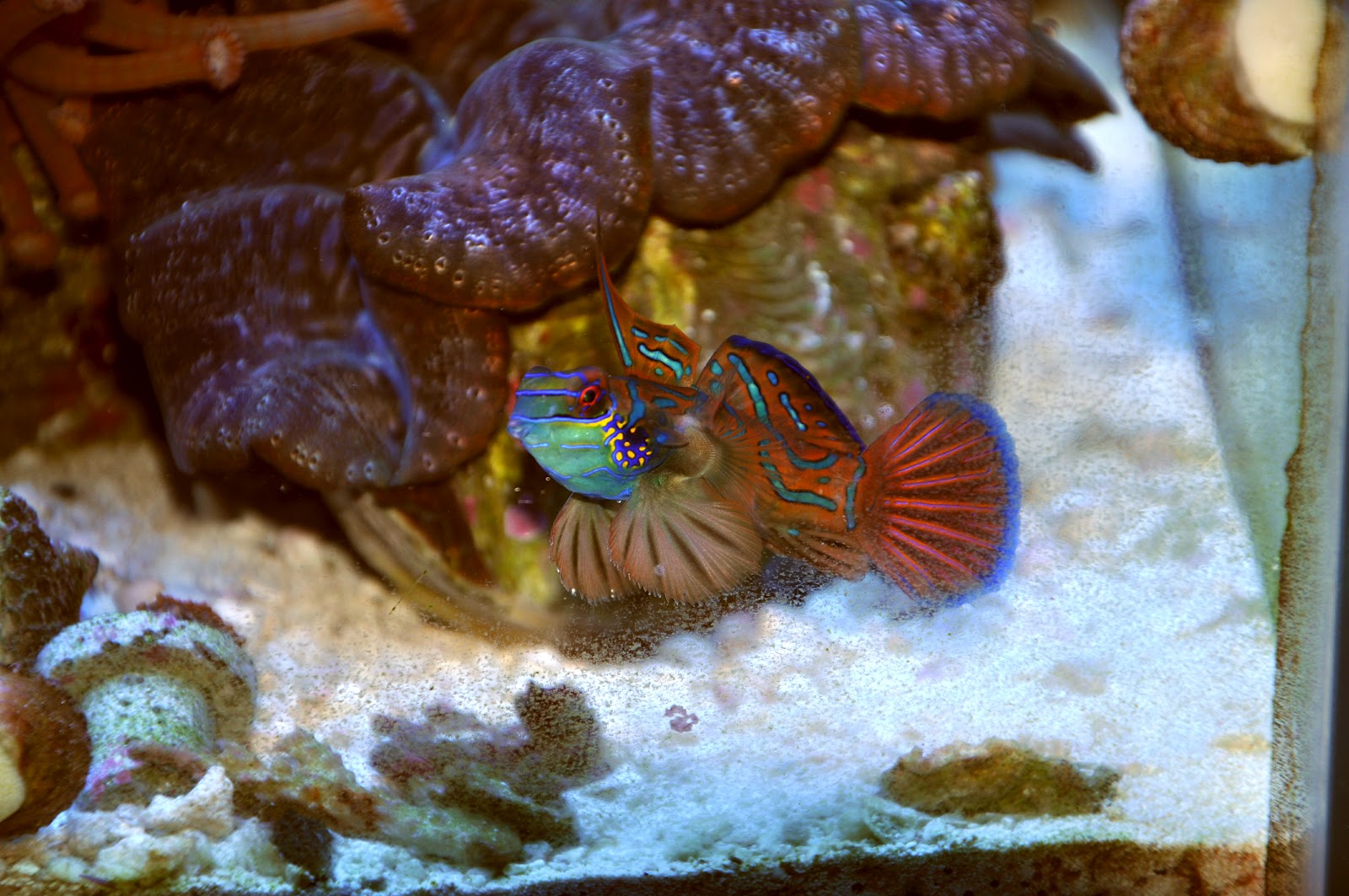
What's Wrong With the Washington Square Park Hawk's Eye? Plus the Mandarin Fish Says Hello

Photo by Francois Portmann- 
A while back Francois Portmann noted that one of the hawks at Washington Square had a problem with one eye.  Unfortunately the problem is still evident.  Take a look.  I'm asking the wonderful rehabbing Horvaths to take a look as well to get their opinion.


Photo by Francois Portmann         
ATTENTION WASHINGTON SQUARE HAWKWATCHERS--
Is this Bobby or Rosie?  
(So far the tally of non-WSP hawkwatchers is leaning toward Bobby but you'll know for sure.)            


Photo by Francois Portmann

And for those who don't know, the Washington Square Hawk Cam is up and running.

N.Y. / REGION   | March 12, 2012
City Room: The Hawk Cam Is Back for Another Season
By EMILY S. RUEB
Hawk Cam 2012: The camera is streaming live from the 12th floor of the Bobst Library at New York University.


Photo by Donegal Browne                     This is a mandarin fish.   I'd been told that  Mandarin were very nifty looking and that I should be sure to get a look at him.  I'd about given up when suddenly Mandarin came out from behind the giant clam where he'd been lurking.
 Mandarin is pretty spectacular.

 Photo by Donegal Browne

Then with a wave,  off  he went to be about his fish business. 

Donegal Browne

Tuesday, March 13, 2012

A HAWK SEASON OF DESPAIR- Four Gone in a Month

 Intrepid broods eggs.  Her three eyasses that season were accidentally poisoned on the nest by being fed a poisoned rat.

 Photo Donegal Browne
2011-Young Ginger Lima, recently deceased,  tends her eyasses fathered by Pale Male- photo courtesy of palemale.com

                
From Myisha Priest,  hawk watcher,  NYU professor,  and the host of a seminar that 

celebrated the wildlife of New York City --


                                    Donna,                                    
   I just read the news of Intrepid. Heartbroken. She was singular in her ability to persevere. Though I guess they all are, which is one of the reasons we love them. Remember when her beak was broken and she made it through the winter anyway?
  What a sad hawk season. Violet, Lima, the Southside hawk and now Intrepid. Yet they say that grief is the price we pay for love...
 I send wishes for peaceful rest for those who are gone, wishes for better times for those who are here, and kind thoughts to the hawks and the tender (and bruised) hearts of those who love them.


 Myisha your note is beautiful.  Thank you.  I am afraid that my heart, among many others, has been bruised very badly this time around.

There have been times of despair before for those who love and attempt to succor New York City's urban hawks but the last year, which includes the long drawn out travail of Violet due to  human failure, has been, I think, the darkest.


Though there is no proof and may never be, as the testing of the very common Red-tail Hawk for poison is low on the list of priorities for the financially strapped New York State Wildlife Pathology budget, the known evidence points to secondary poisoning as the cause of death in this  latest wave of unblemished beautifully feathered corpses.

 Poison is also arguably a possible vector in the disappearance of Pale Male's mate of many years, Lola.

Today I am at a loss as to what more we can do soon enough to help the now living survive.  For assuredly what we have done has not been enough to save those who are gone and my feeling is that only luck has allowed those who still live to continue their lives.


Education is slow.  Poison is fast.


If mature, city-savvy hawks such as Intrepid, and before her, Builder,  Athena, Hawkeye, Ginger Lima, and Lola to name a very few, have not found any clues to warn them away from the rats that killed them, there likely aren't any clues and the death toll will only continue. 


Can we find a strategy that works with the rapidity that poison does?   


Hawkeye of Fordham, mate of Rose and the father of many, many well fledged young died of poison.  Photo Donegal Browne

Photo Donegal Browne

Athena of the Triborough Bridge nest,  a mother for many seasons, died of  rodenticide secondary poisoning leaving a clutch of eggs.  Her mate Atlas attempted to hatch the eggs on his own, but with no one to hunt for him or spell him on the nest so he could leave to hunt and eat,  the eggs were sometimes unattended.  They never hatched.

 FROM NEW YORK MAGAZINE

Yet Another Red-Tailed Hawk Found Dead


It hasn’t been a good late winter for New York’s red-tailed hawk population. The first big news came when the first lady of New York’s hawks — Pale Male’s latest love interest — was found dead. Shortly thereafter, the body of another unidentified red-tailed hawk was found in Central Park. There was also a young hawk found dead in the park, which was mostly ignored outside of hawk watching circles.  But now, yet another  bird, this one a Riverside Park resident, has bitten the dust, bringing the recent death toll up to four.

 READ MORE

 Intrepid, Riverside Mom hunts.  Before she died, she had outlived a mate and three eyasses who had all died of poison.                                                      Photo Donegal Browne

EDUCATE AND ORGANIZE YOUR FRIENDS AND NEIGHBORS ABOUT SANITATION, RATS,  SECONDARY POISONING AND WHAT THEY CAN DO TO MAKE THINGS BETTER FOR THE RAPTORS IN THEIR NEIGHBORHOODS.

Thanks to Rachel Shriff for posting flyers about secondary poisoning and the dangers of second generation poisons in her Queens neighborhood.

In memory also of all the hawks unnamed, who have died of secondary poisoning and human negligence. 

Donegal Browne