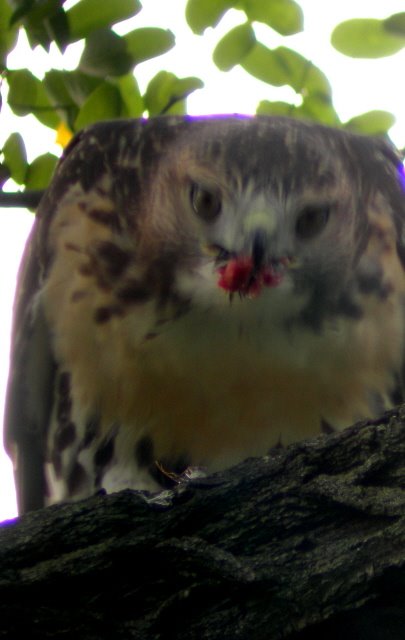
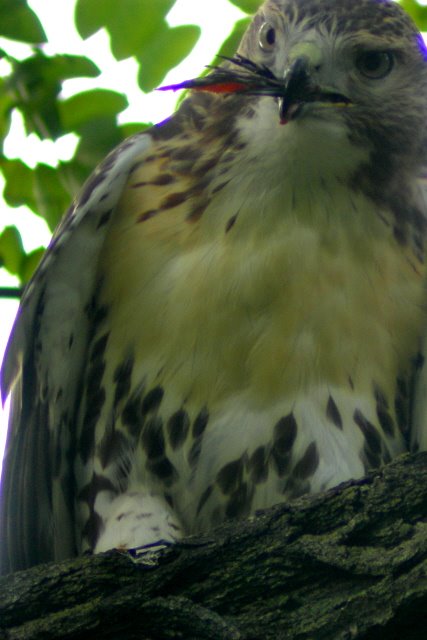
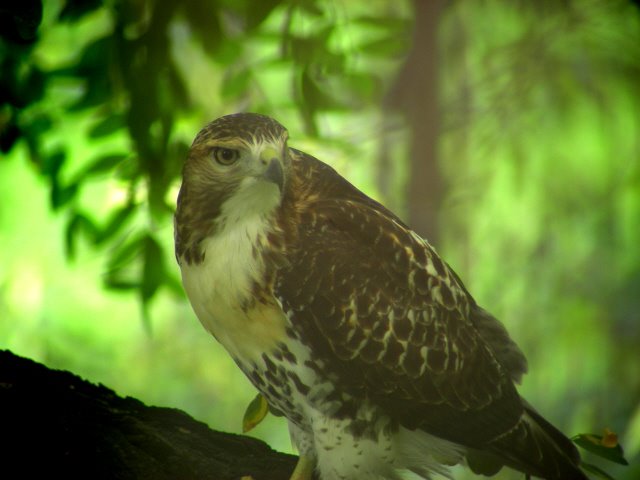
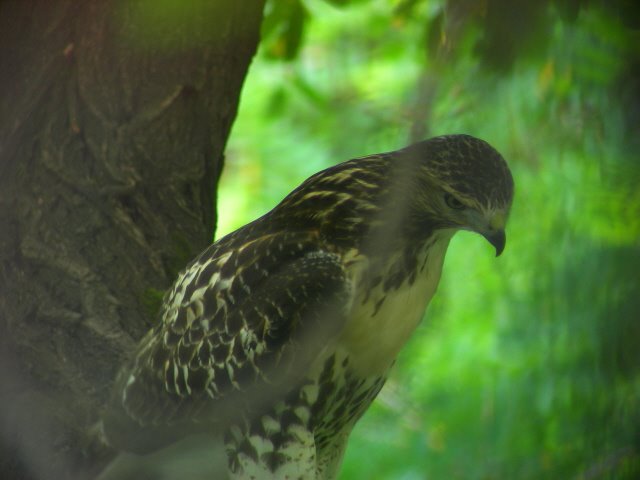
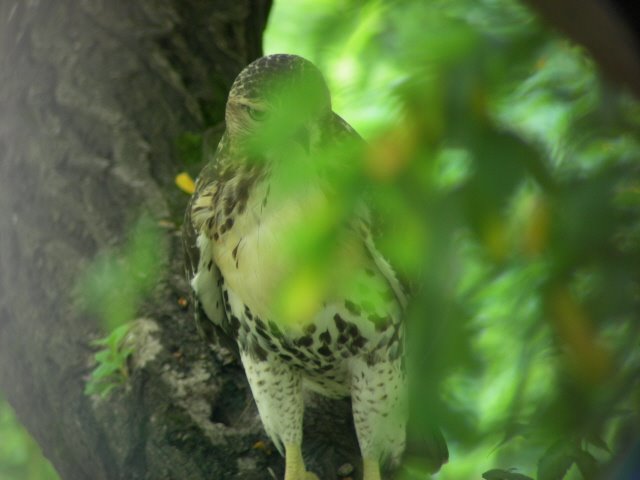
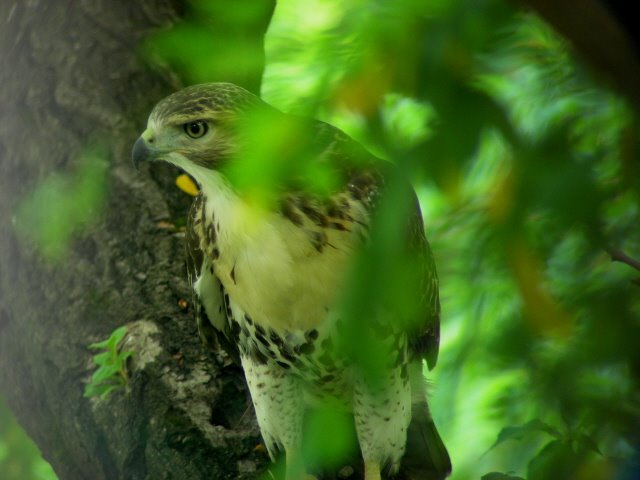
Note the pinpoint pupils, a Bacchanale in the making.
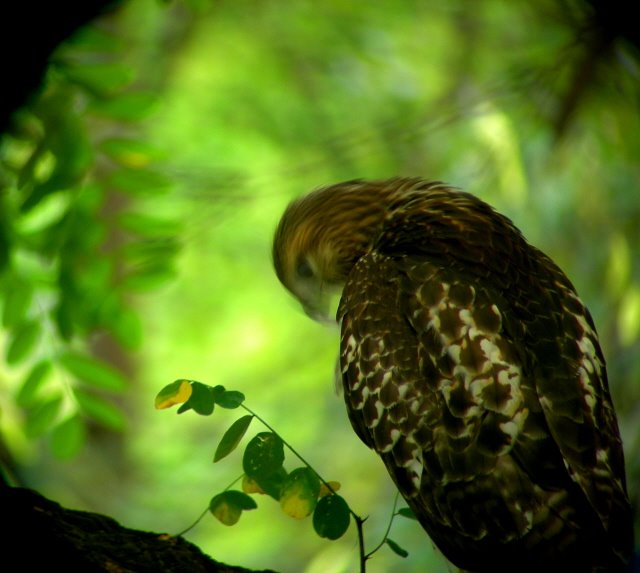
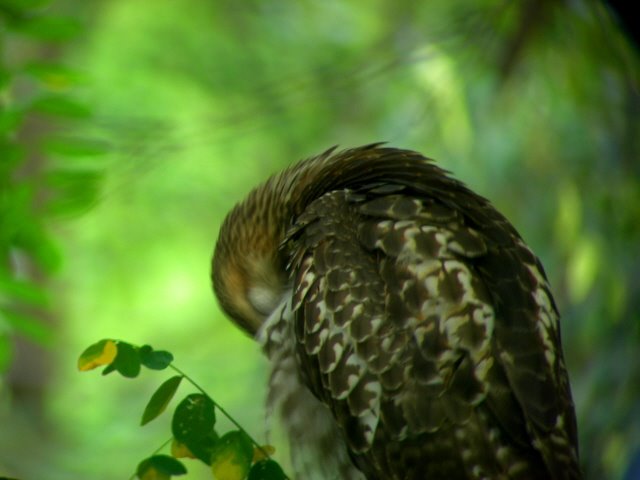
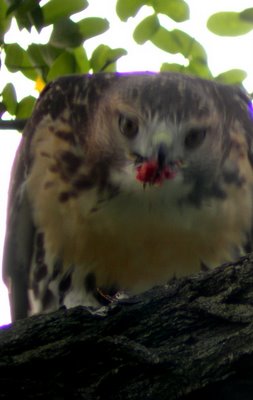 The Fledges look like they eat with an incredible internalized focus. Still under their parent's vigil, they look utterly absorbed with the sensation of food and passionate about it to boot.
 And when the other fledge nears, eating becomes almost an ecstasy of gobbling. Even the primary feathers must be ingested.
Just a reminder via John Blakeman about what rare opportunities we have in NYC in the hawk activities we're able to observe and even sometimes, take almost for granted.Donna,
Your verbal and photographic descriptions today of the young red-tail hunting indicate that the bird has plenty to eat. If it were really hungry, it would have been leaning over with an intense hunting look on its face. It would have pounced. The bird is well-fed.
Let me say that you are observing things I've never been able to discover out here. In June and July, our wild, rural fledged eyasses do just what you are watching. But our birds are in expansive, remote woodlots, usually 25 to 50 acres. The young birds also fly around between the woodlots. I can see them go in there, and I could walk in myself to try to see what they are up to, but because they don't see humans walking around beneath (unlike everywhere in NYC), the young birds I want to study just fly off a few hundred yards further into the forest and park themselves quietly in the foliage, often completely undiscovered.
Your birds apparently pay little attention to observing people. You have -- of all places, in Manhattan -- the unique opportunity to watch young red-tails learn to hunt on their own. I get only glimpses of this out here in the rural wilds. There in the City, you are seeing it first hand and in detail. Great stuff. My thanks.
--John Blakeman
As to just how well fed these youngsters are goes to the heart of an observation that was related to me recently. Robert Schmunk, uptown hawkwatcher, and Susan of the red hair and bicycle observed something not long ago, that after seeing growing Red-tails wolf down prodigious amounts of food, I thought them basically bottomless pits, that I didn't think possible. Fledges are some serious eaters.One of the divine parents dropped a pigeon off and the fledge that was the stronger flyer made it to the food first. But instead of tearing into it as usual while the the second fledge begged and bobbled his way over to the drop off site, the first fledgling just sort of pushed the prey around. Robert and Susan began to wonder what was going on. Was the fledge ill? Eventually Youngest made it over to the prey and with no todo whatsoever was given access and ate for a full half hour. That's one big pigeon.We've come to believe that wonder of wonders, the youngster was just too full to choke down another morsel. That's a well fed Fledgling.